The Crooked Forest, Poland

The Crooked Forest, Poland


April 5, 2024 | Allison Robertson

The Crooked Forest, Poland


The Mysterious Forest

On the outskirts of a small town in Poland, is an unusual forest where the trees grow in a bizarre formation—and the world is full of fascinating theories as to why this may be.

crooked forest split image

Advertisement

What is it?

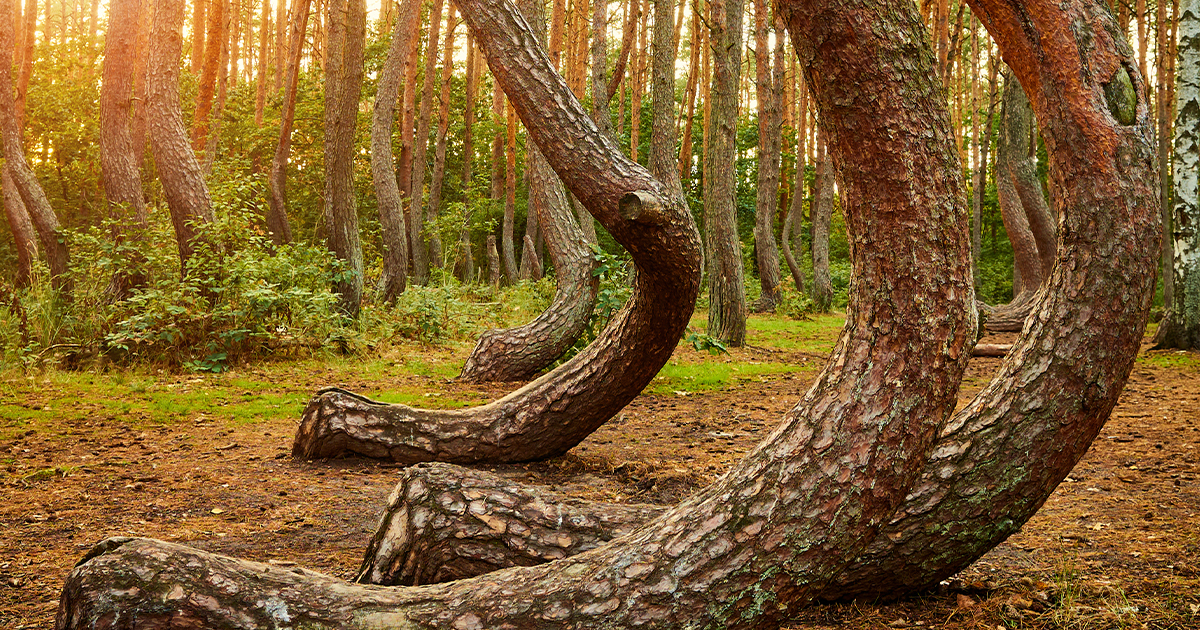
The Crooked Forest is a small grove of about 400 oddly shaped pine trees. It is officially a protected natural monument of Poland.
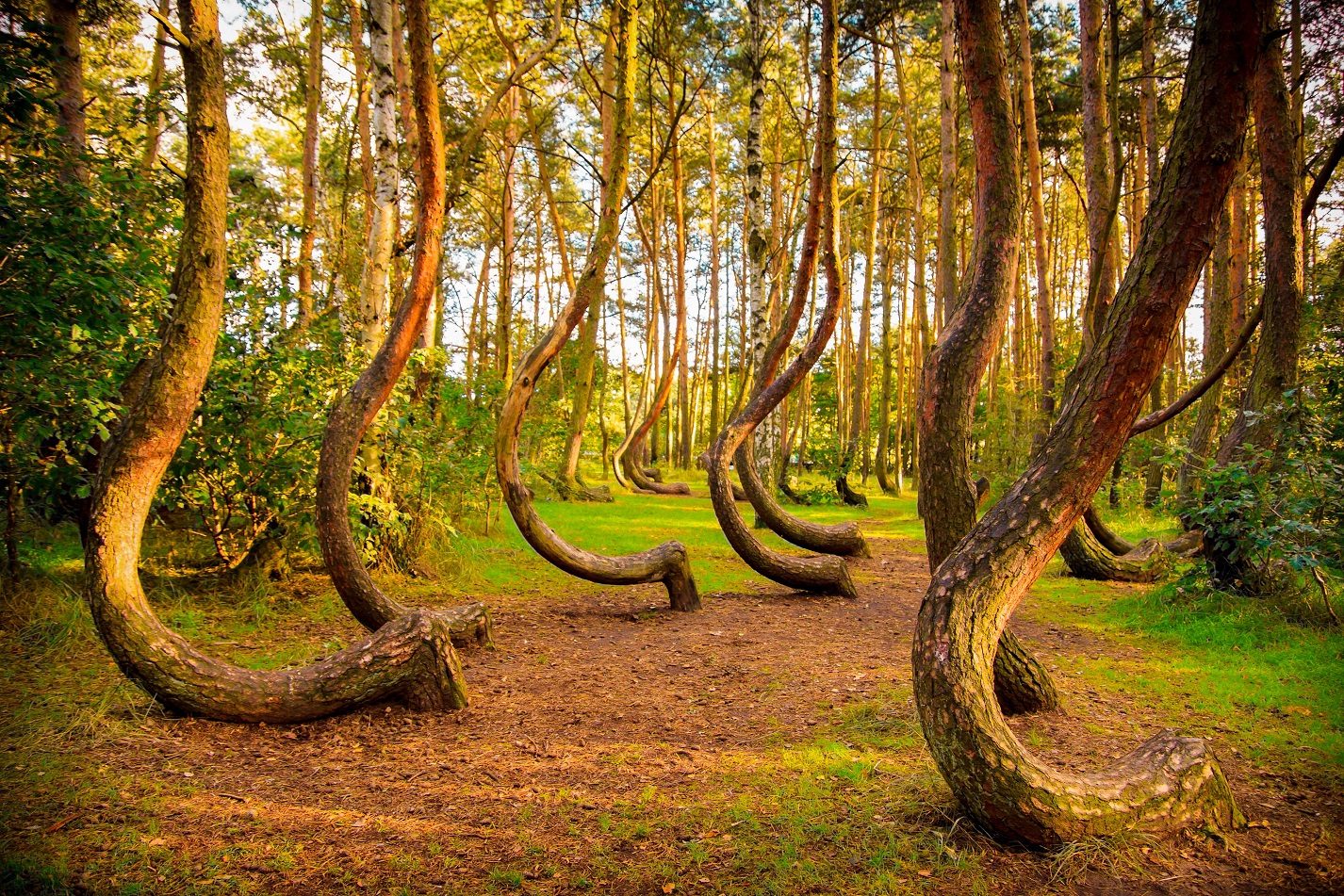
The famous Gryfino mysteriously curved pine treesseawhisper, Shutterstock

Advertisement

Where is it?

The Crooked Forest is located in the village of Nowe Czarnowo near the town of Gryfino, West Pomerania.
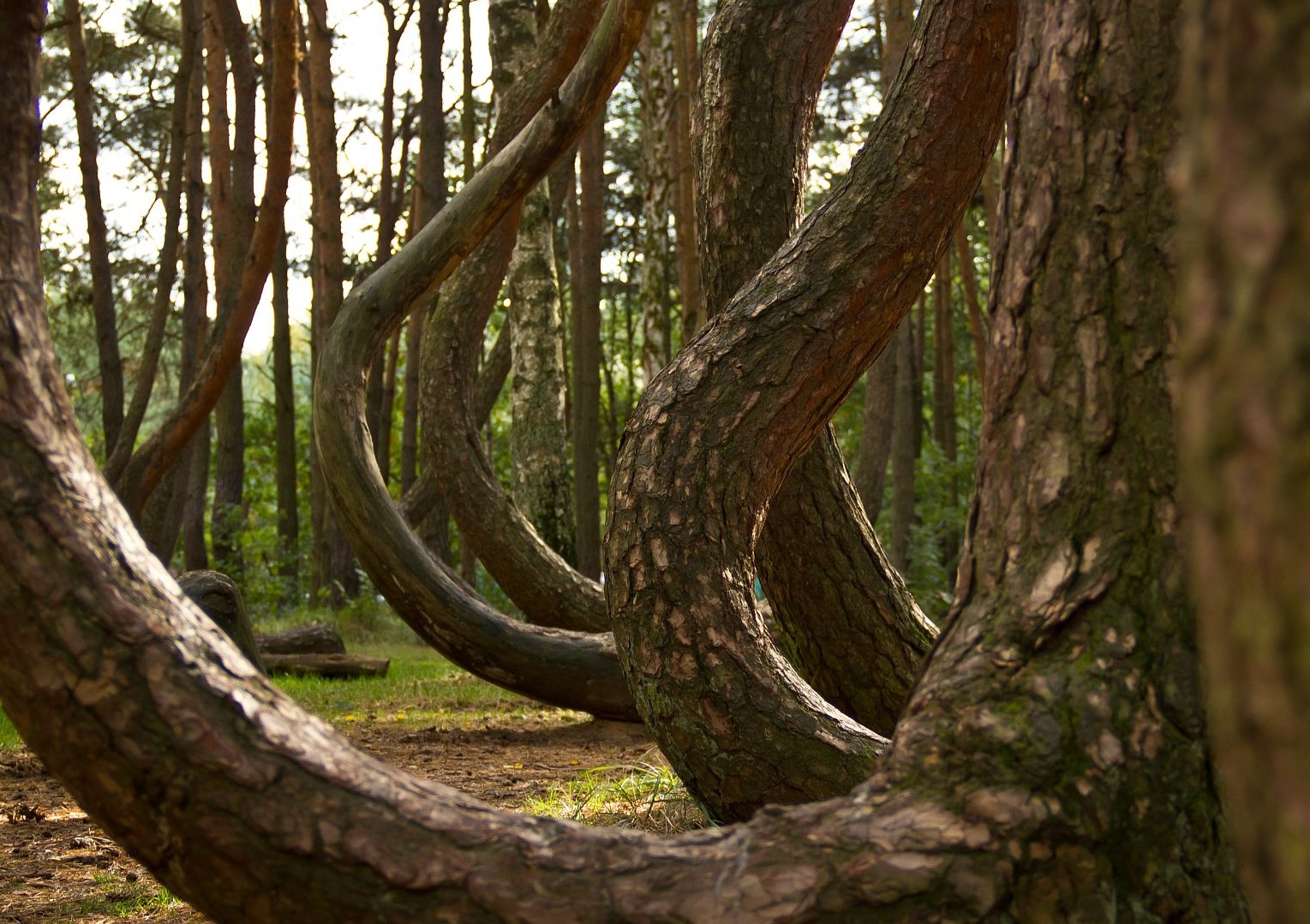
Crooked Forest, Nowe Czarnowo - 2013Kengi, Wikimedia Commons

Advertisement

What do the trees look like?

The trees in the Crooked Forest grow with a 90-degree sharp bend northward, but then curve back to grow straight up into the sky.
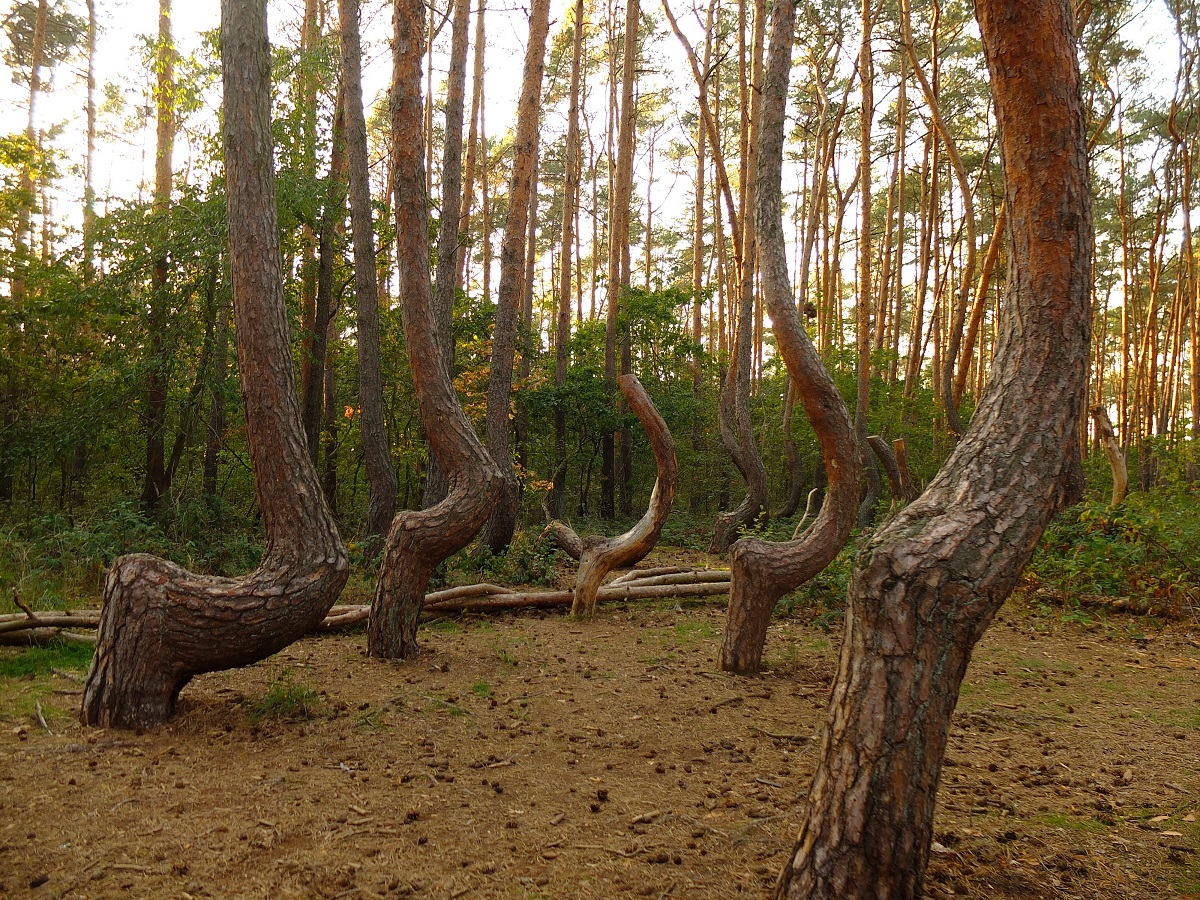
Crooked wood (Krzywy Las) - Gryfino, Western Pomerania (Zachodniopomorskie), PolandRobert Szymanski, Shutterstock

Advertisement

How tall do the trees get?

Despite the unnatural curves bending three to nine feet sideways at their bases, these trees are generally healthy and grow up to 50 feet tall.
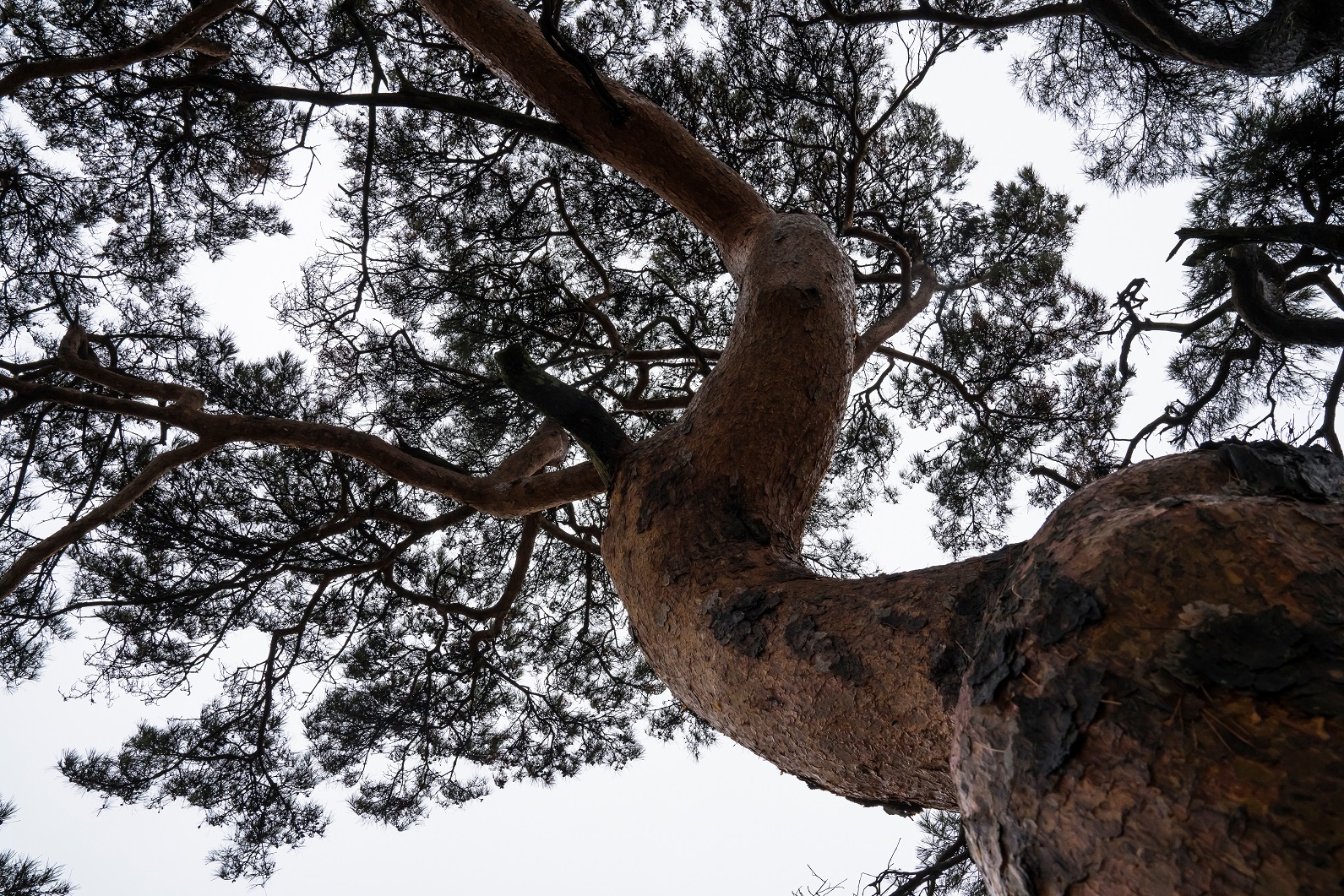
Crooked wood (Krzywy Las) - Gryfino,Polandmeteorite, Shutterstock

Advertisement

When were the trees planted?

It is believed that the trees were planted back in the 1930s, and have grown in this bizarre shape since, with every single pine tree taking the same shape and size.
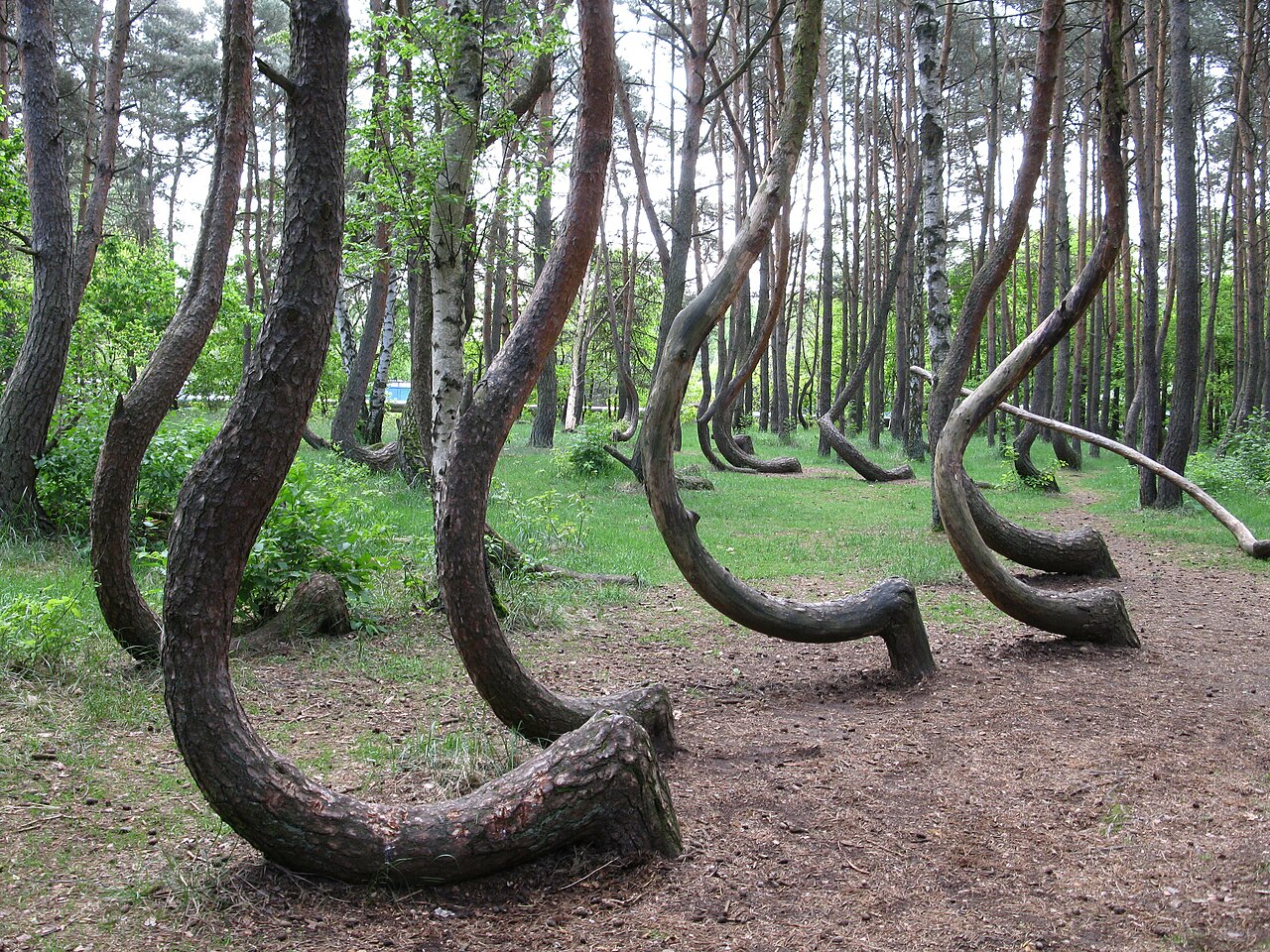
Crooked wood (Krzywy Las) - Gryfino, PolandRzuwig, CC BY-SA 3.0, Wikimedia Commons

Advertisement

Why are the trees crooked?

Nobody knows what happened to the trees to make them take the shape they have, but there are many interesting theories.
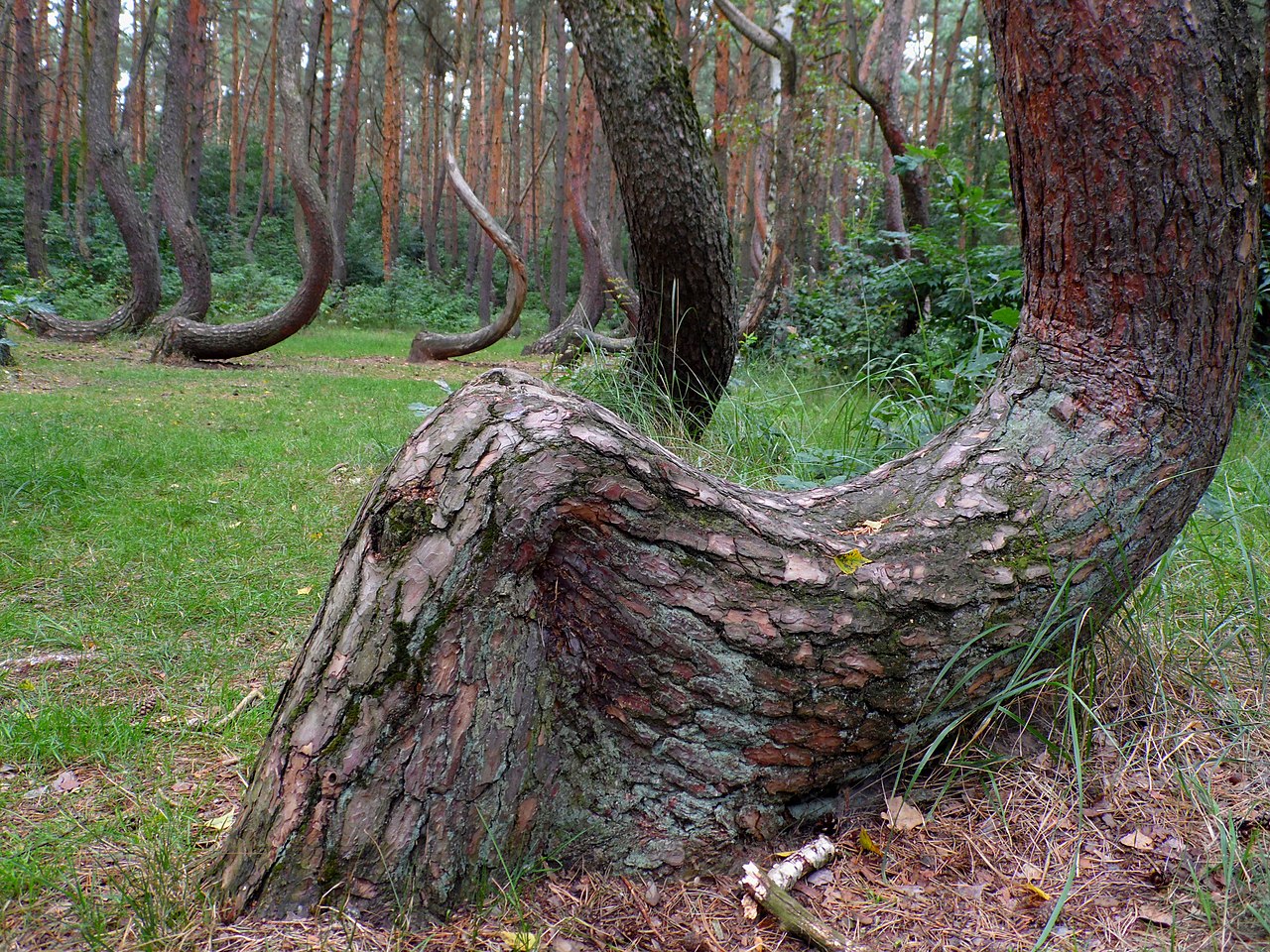
Crooked wood (Krzywy Las) - Gryfino, Poland - 2013StasiÓ Stachów, CC BY 3.0, Wikimedia Commons

Advertisement

Theory #1

The most common theory as to why the trees grow in such an odd shape is: gravitational pull.

man in red shirt thinking somethingAndrea Piacquadio, Pexels

Advertisement

Gravitational Pull

Some people hypothesize that a unique gravitational pull in this particular area caused the trees to grow curved northwards.

However, there’s a quick explanation as to why this could not be true.
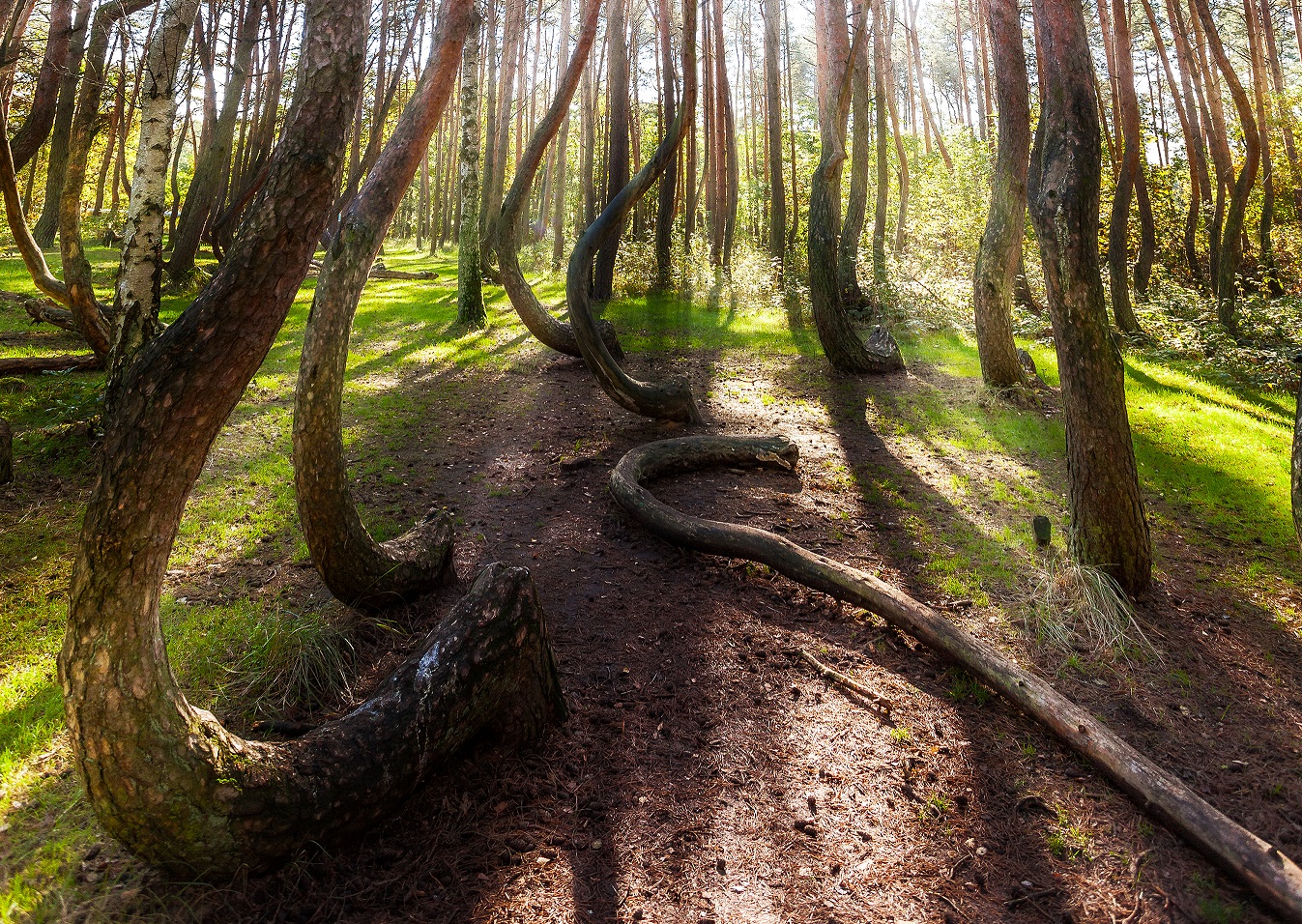
Beautiful morning in the Crooked Forest with sun rays and long shadows.Maciej Bledowski, Shutterstock

Advertisement

How Gravity Works

Gravity typically pulls things downward, and not at a curve—which debunks the idea that gravity is to blame.

So, what else could it be?
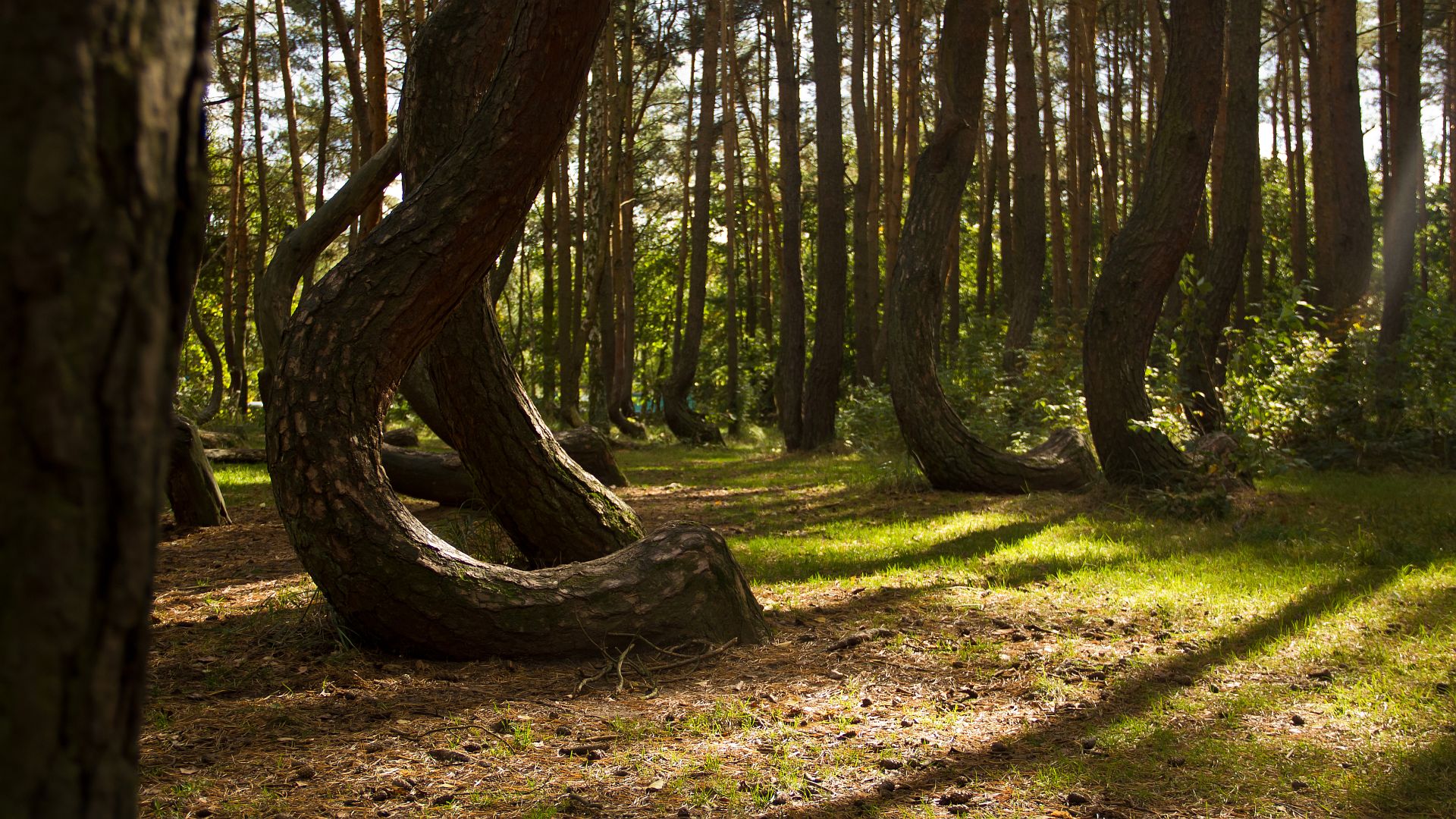
Crooked Forest, Nowe Czarnowo - 2013Kengi, Wikimedia Commons

Advertisement

Theory #2

Another common belief people have for the rounded shape of the trees is in regards to precipitation—specifically snow.
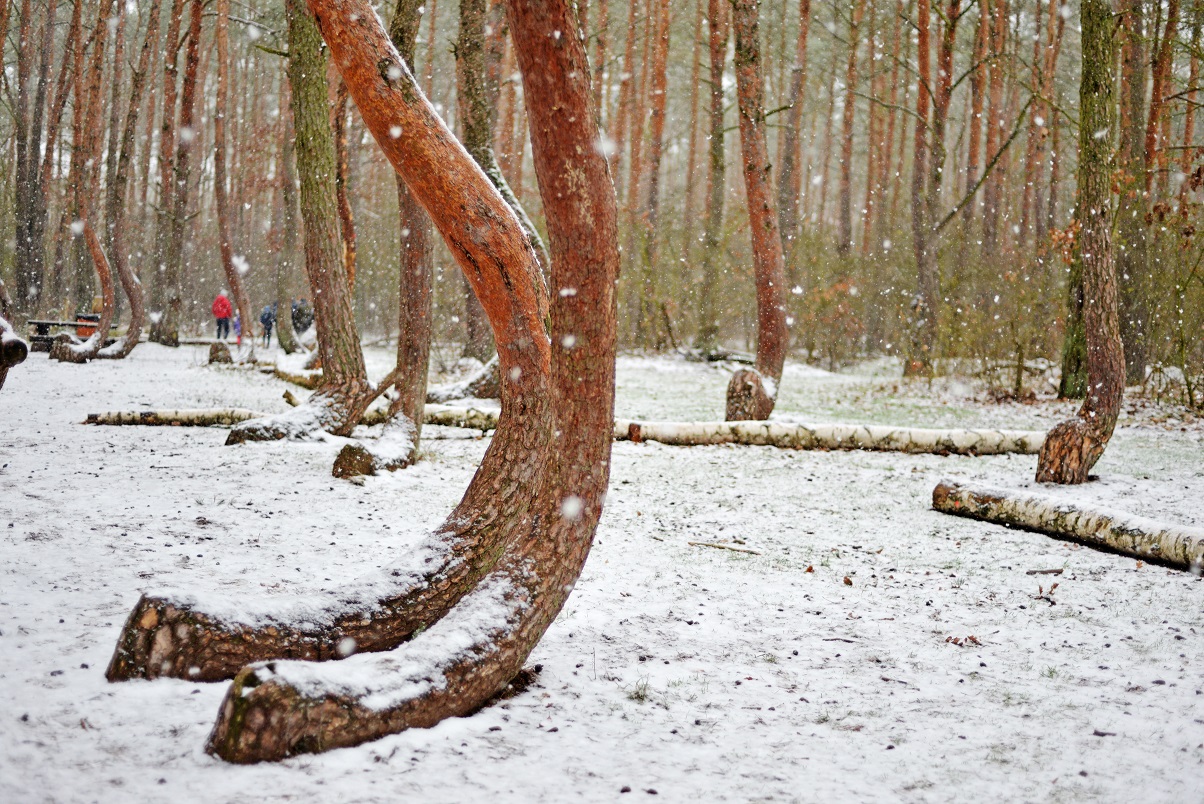
Crooked forest in winter in PolandKarolina Klink, Shutterstock

Advertisement

Heavy Snowfall

It is believed that a heavy snowfall in the area weighed down the trees when they were sprouting, causing them to grow crookedly at the base.

Person Holding an Umbrella Near Bare TreesIqbal farooz, Pexels

Advertisement

Other Vegetation

The snowfall theory can also be debunked because other groups of pine trees, and other vegetation in the same forest were not affected the same way.
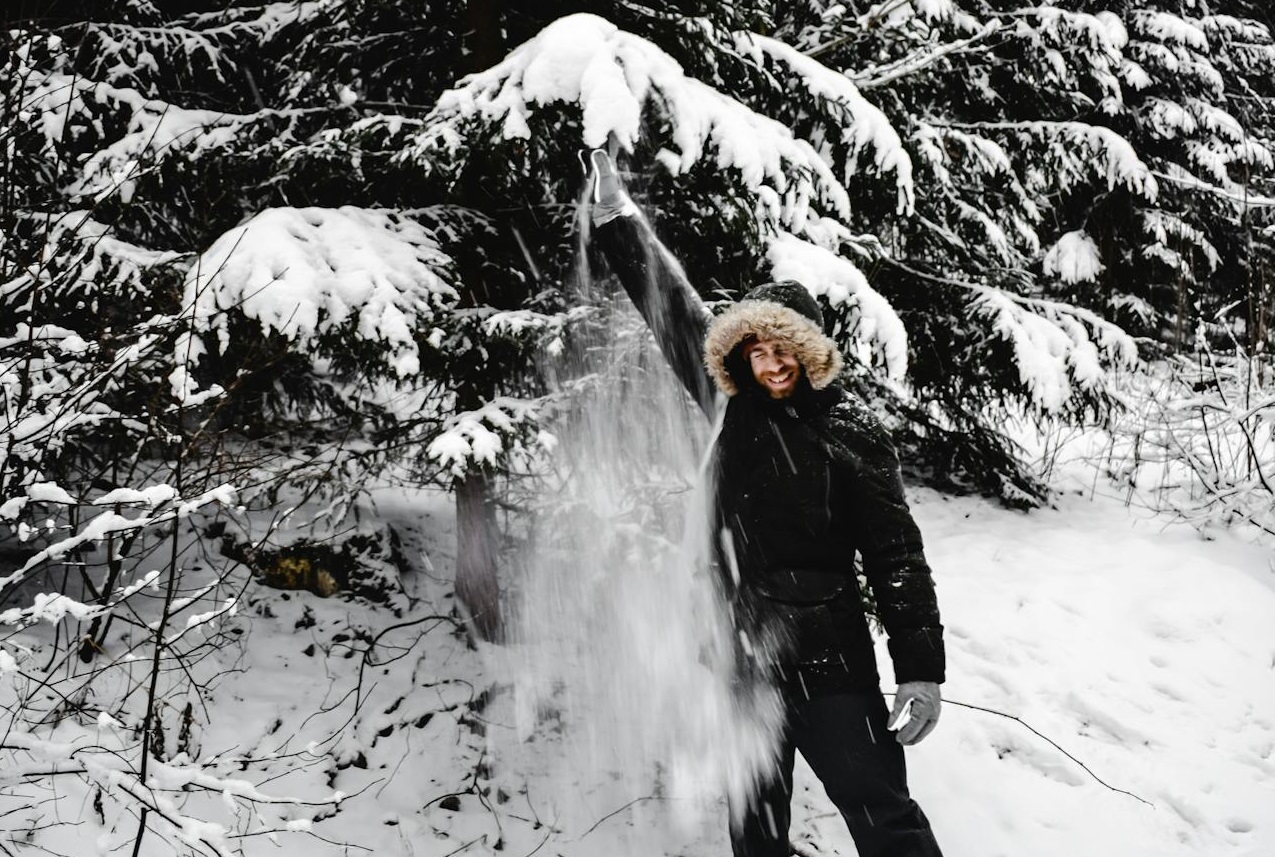
A Man Shaking the Tree Branch of a Snow Covered TreeEva Bronzini, Pexels

Advertisement

Theory #3

Another theory includes Soviet tanks parked in the forest causing the trees to grow out from under them while they sat.
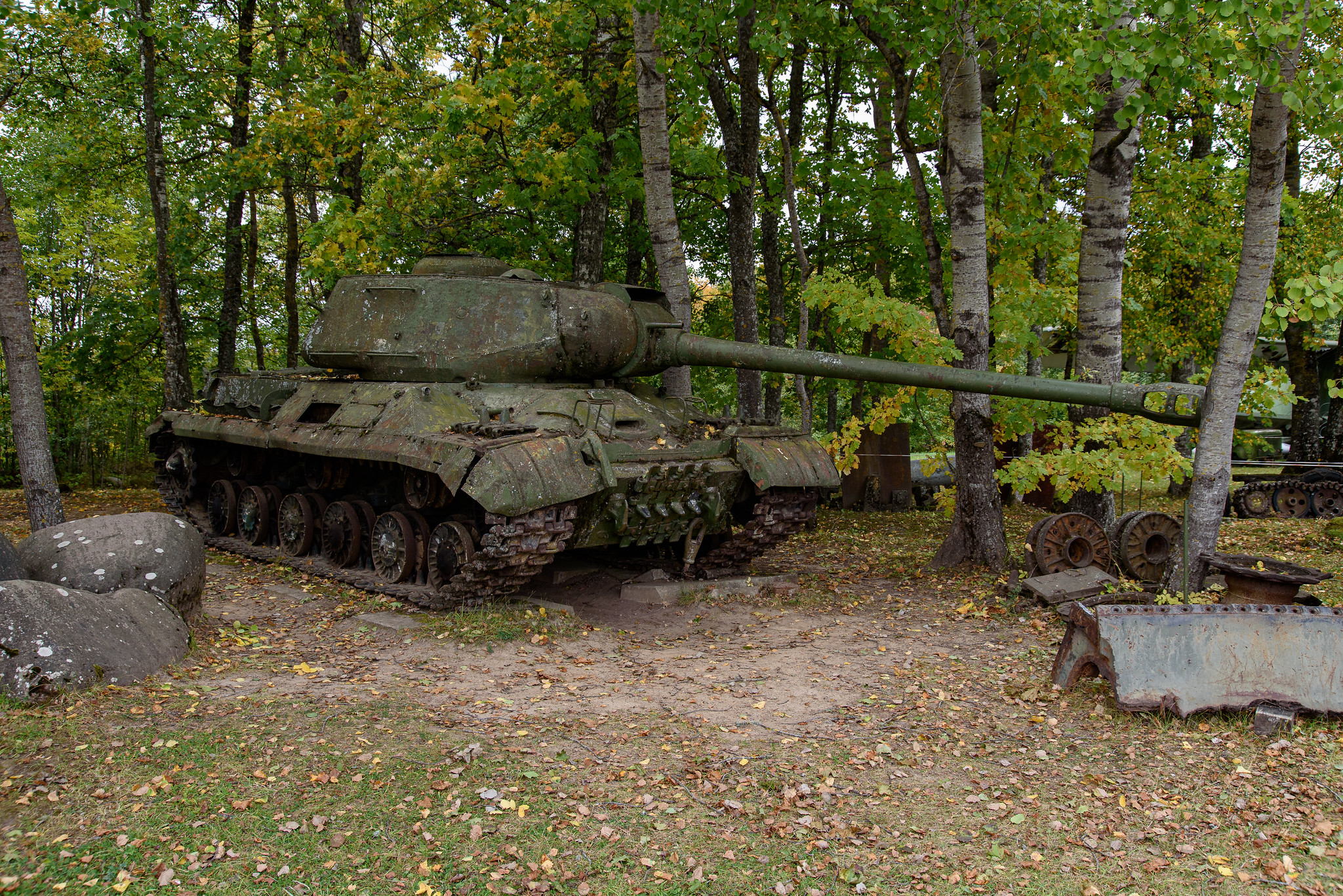
Old tank in the woods.270862, Flickr

Advertisement

Soviet Tanks

This theory also doesn’t hold up because it the curvature of the trunks is too smooth for such destruction to have occurred.

Also, the tanks would have greatly affected the rest of the forest as well—which there is no evidence of.
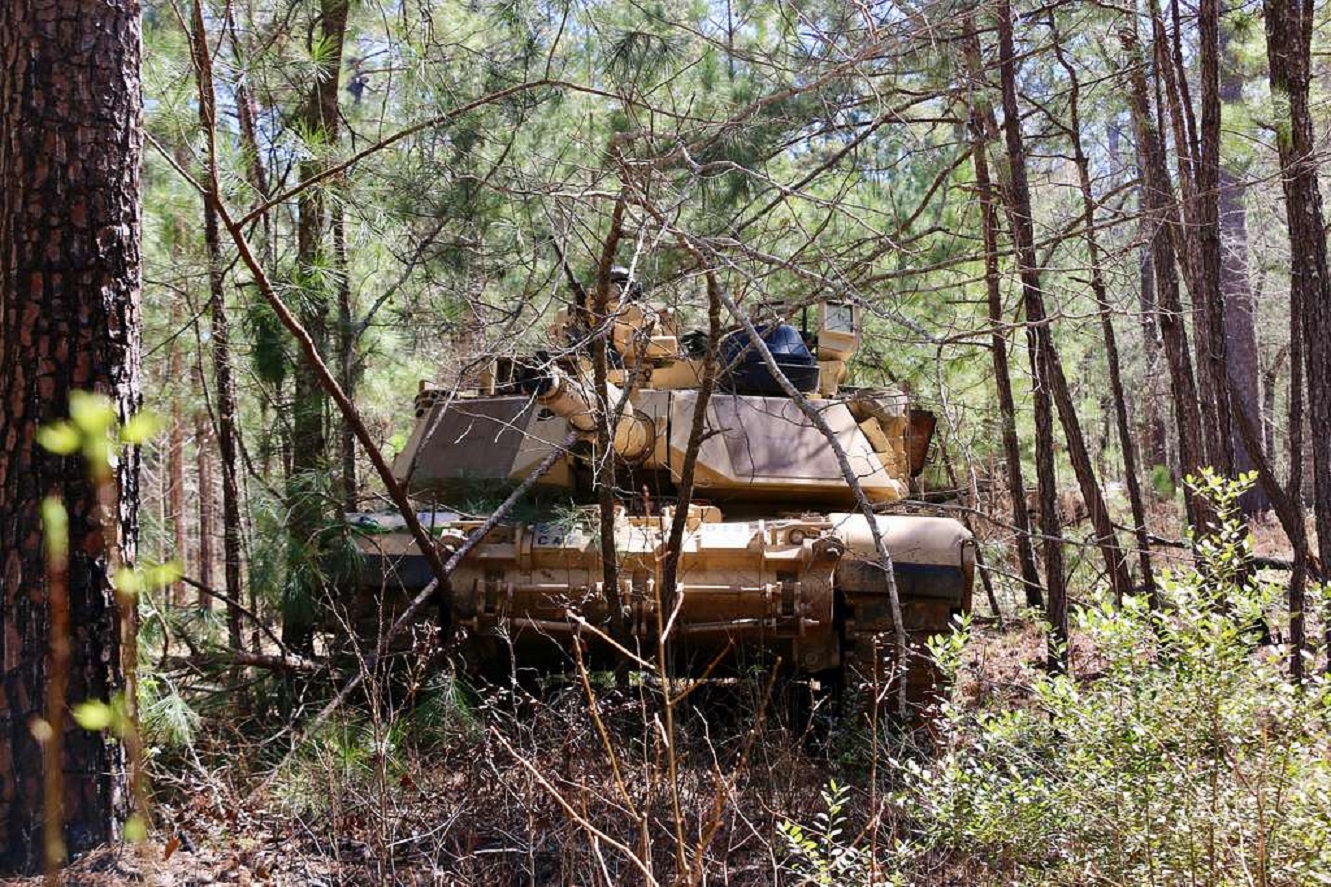
Abrams Main Battle Tank in the woods.Defense Visual Information Distribution Service, Picryl

Advertisement

Theory #4

Some suspect that the trees were grown for the rims of wooden cartwheels as the grain direction would have produced very tough wheels.

It’s a practice referred to as Tree Shaping.
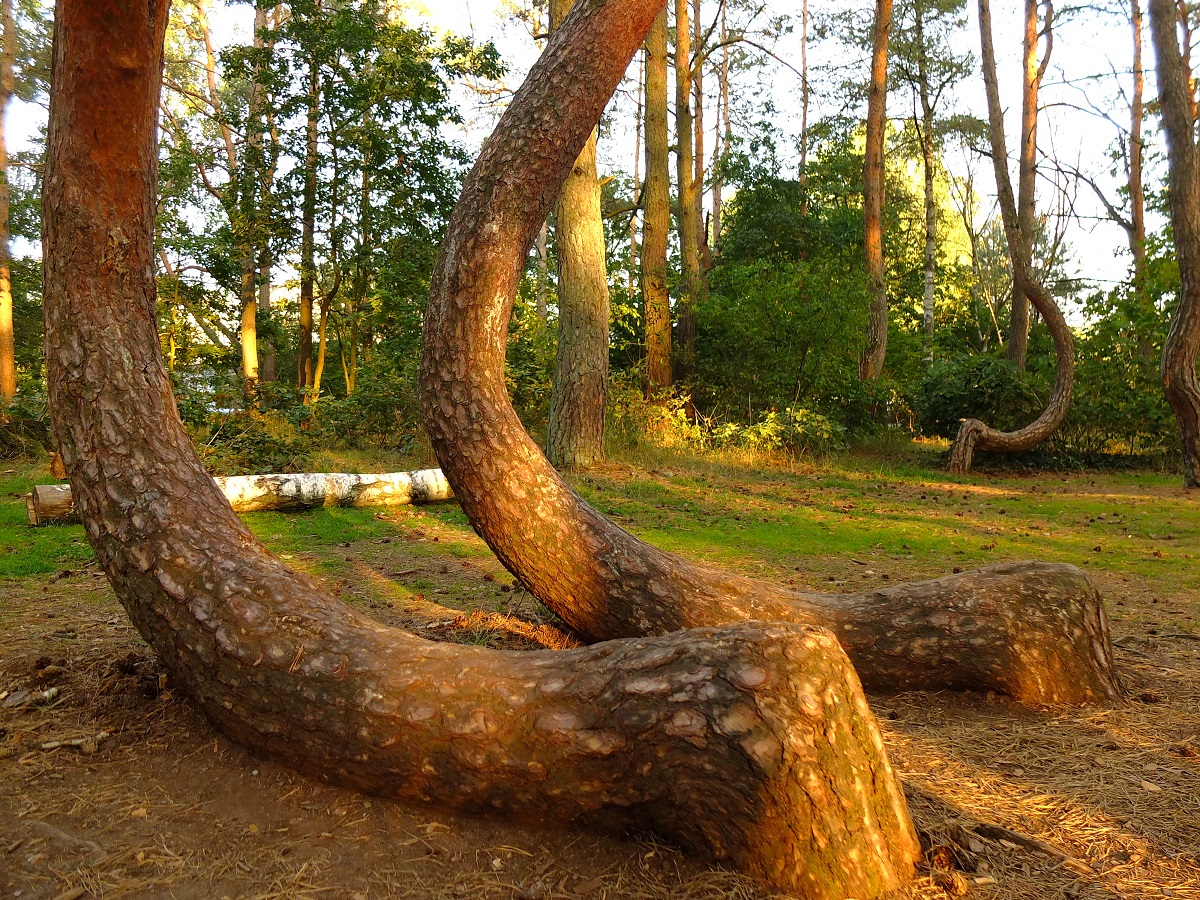
Crooked wood (Krzywy Las) - mysterious bent trees near Gryfino - PolandRobert Szymanski, Shutterstock

Advertisement

What is tree shaping?

Tree shaping is a common agricultural practice in Europe, India, and America. Trees are bent in order to make furniture, instruments, carts for transport, boats, and more.

Carpenter sanding a chair with sandpaper in a small workshopIvan Radic, Flcikr

Advertisement

How easy is it to shape trees?

Young trees are comparatively easy to manipulate and shape. So, it is highly possible that this impressive forest was a result of a simply business venture that was left unfinished.
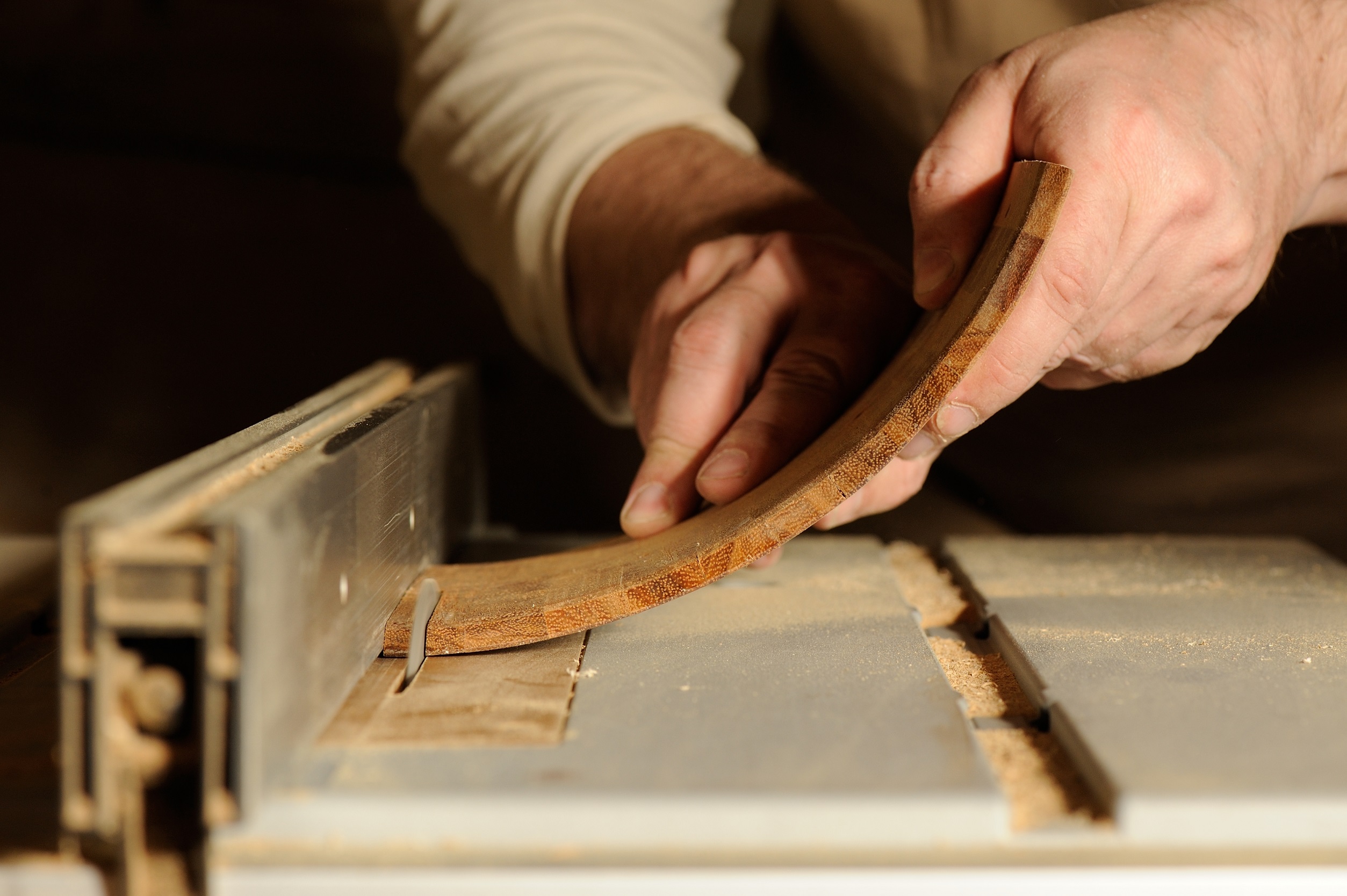
Carpenter cutting curved piece of wood by wood cutterAlexey Borodin, Shutterstock

Advertisement

Theory #5

The most common and most likely explanation is that local farmers planted and manipulated the trees when they planted them back in 1930.

This is similar to the tree shaping theory.
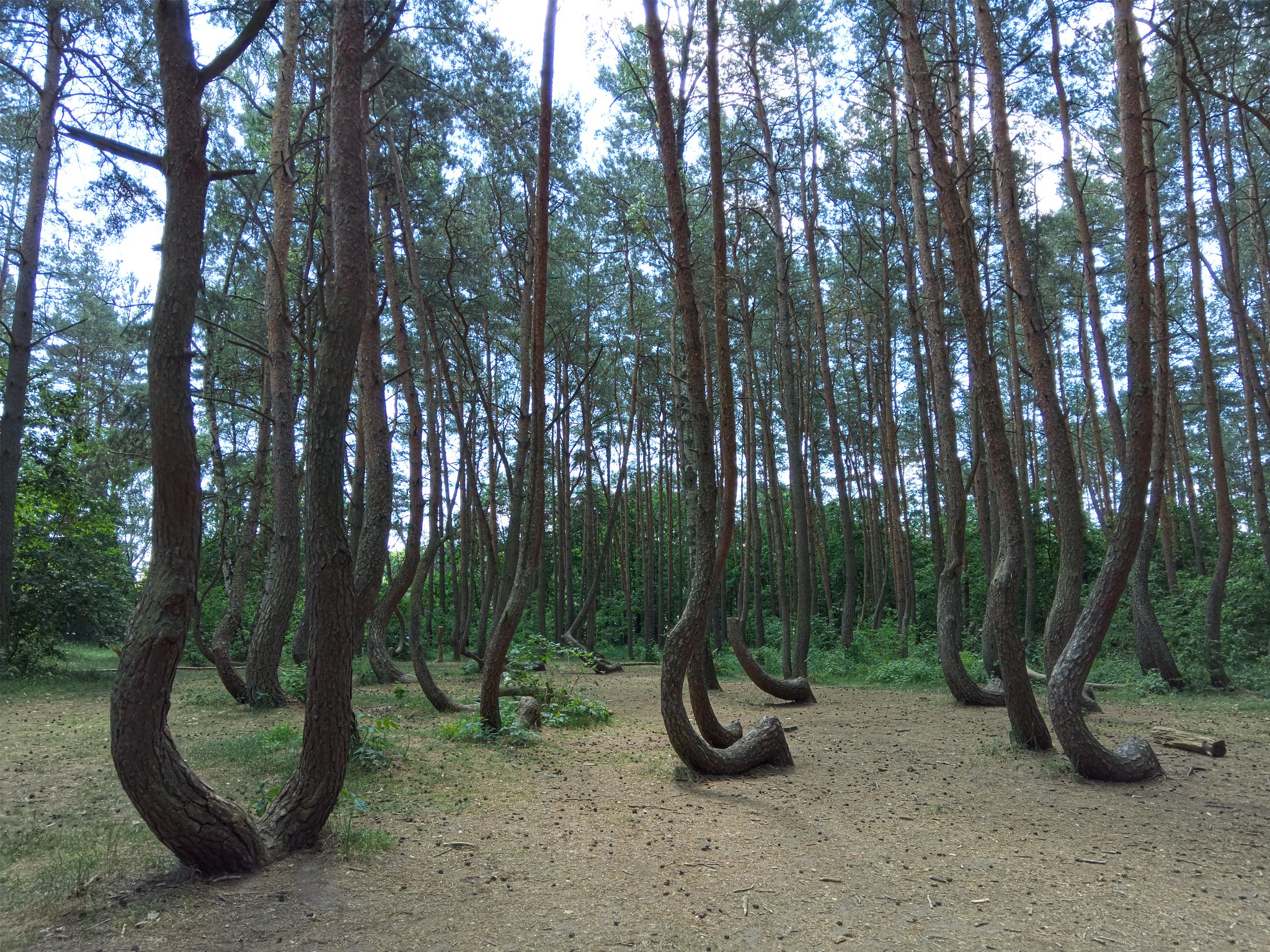
The Crooked Forest (Polish: Krzywy Las)Adam Lederer, Flickr

Advertisement

Trunk Curvature

Although that is the most likely scenario, it is estimated that the trees were seven to ten years old when they experienced the force that resulted in trunk curvature.
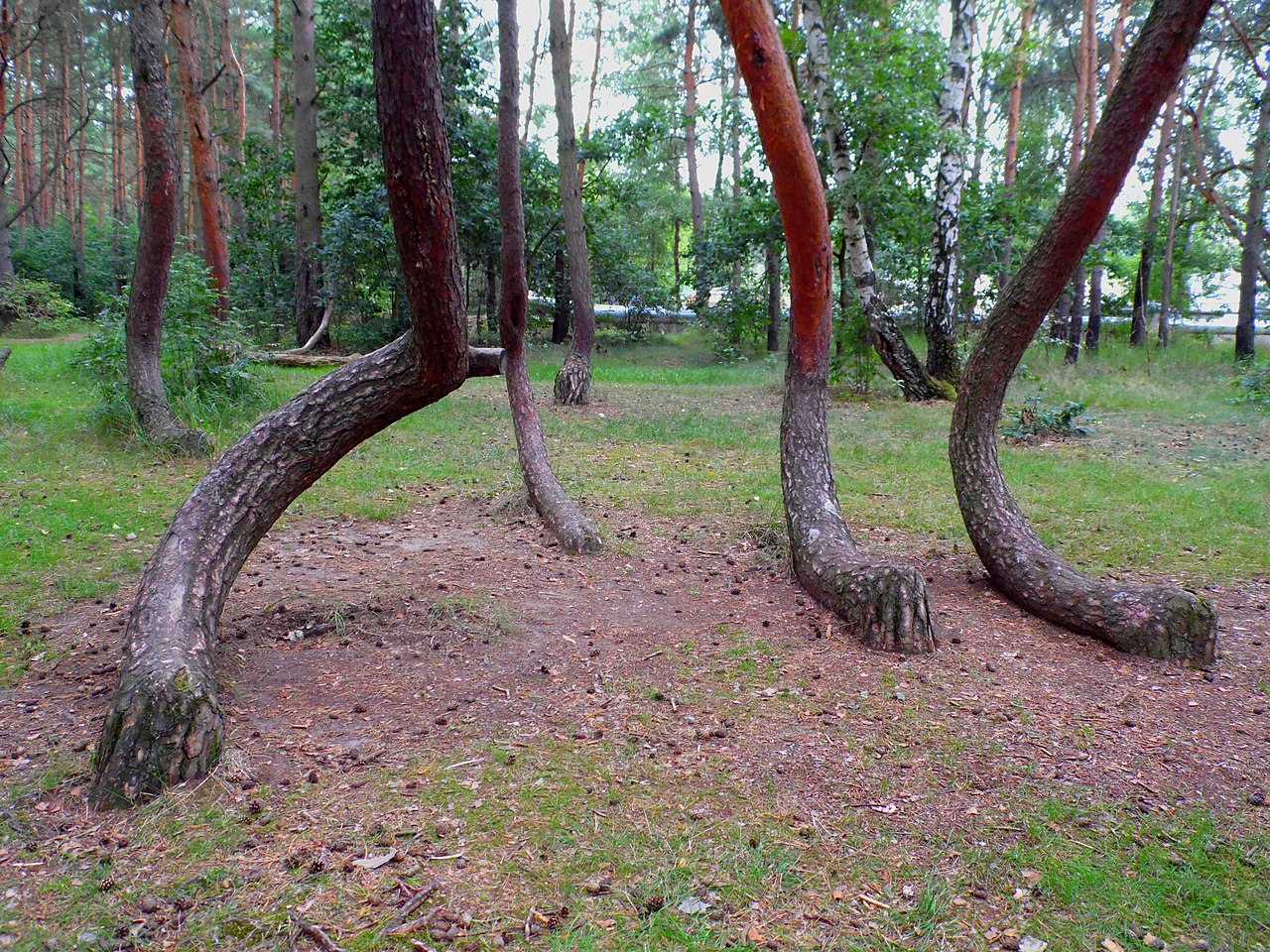
Crooked wood (Krzywy Las) - Gryfino, PolandStasiÓ Stachów, CC BY 3.0, Wikimedia Commons

Advertisement

Additional Theories

There are several other theories about the weird shaped trunks that go as far as blaming aliens, and genetic mutations.

A science fiction concept of a man looking at aliens coming out the mist.Raggedstone, Shutterstock

Advertisement

Answers Remain Unknown

Ultimately, we may never know the true reason why the trees have grown in such a bizarre way. Researches have come up with dozens of theories, though most defy all possibilities.
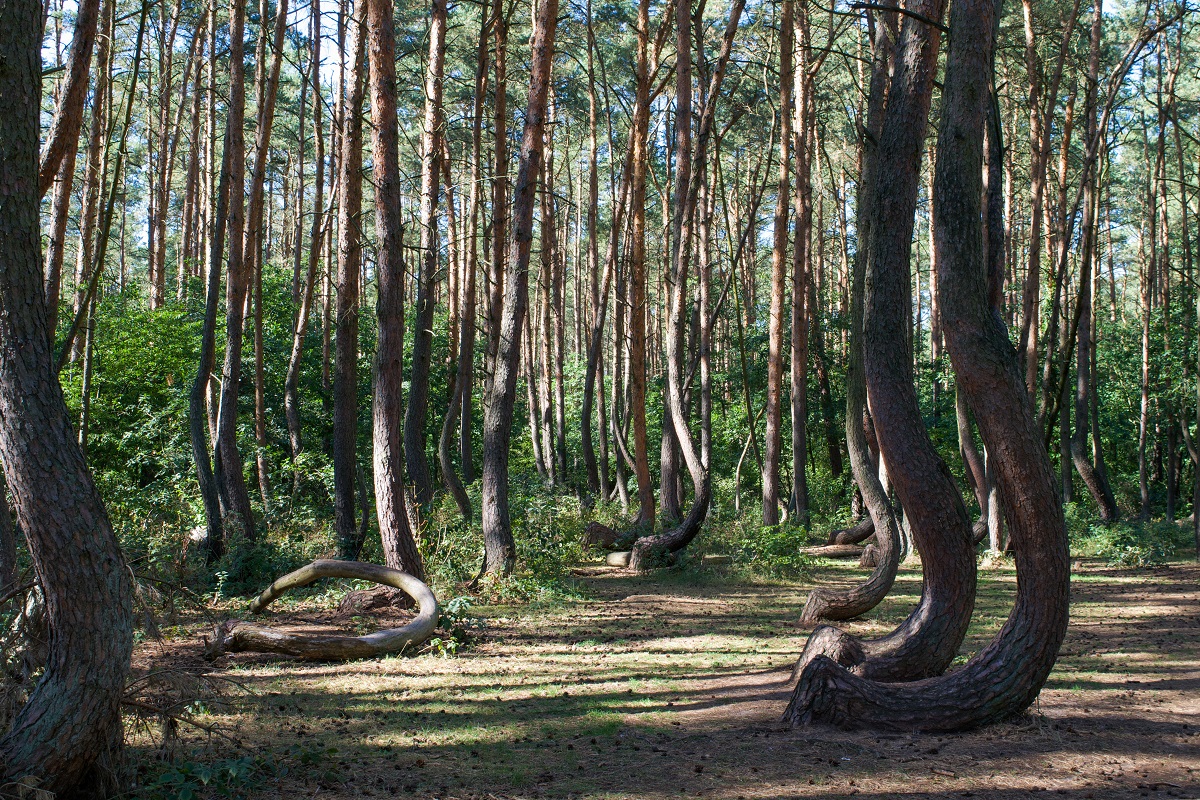
Warped trees of the Crooked Forest, Krzywy Las, in western PolandTravelsewhere, Shutterstock

Advertisement

Abandoned Town

The town of Gryfino was mostly abandoned between the early stages of WWII until the 1970s, so the people who were there before the war—and likely who had the answers—are no longer around to share the secret.
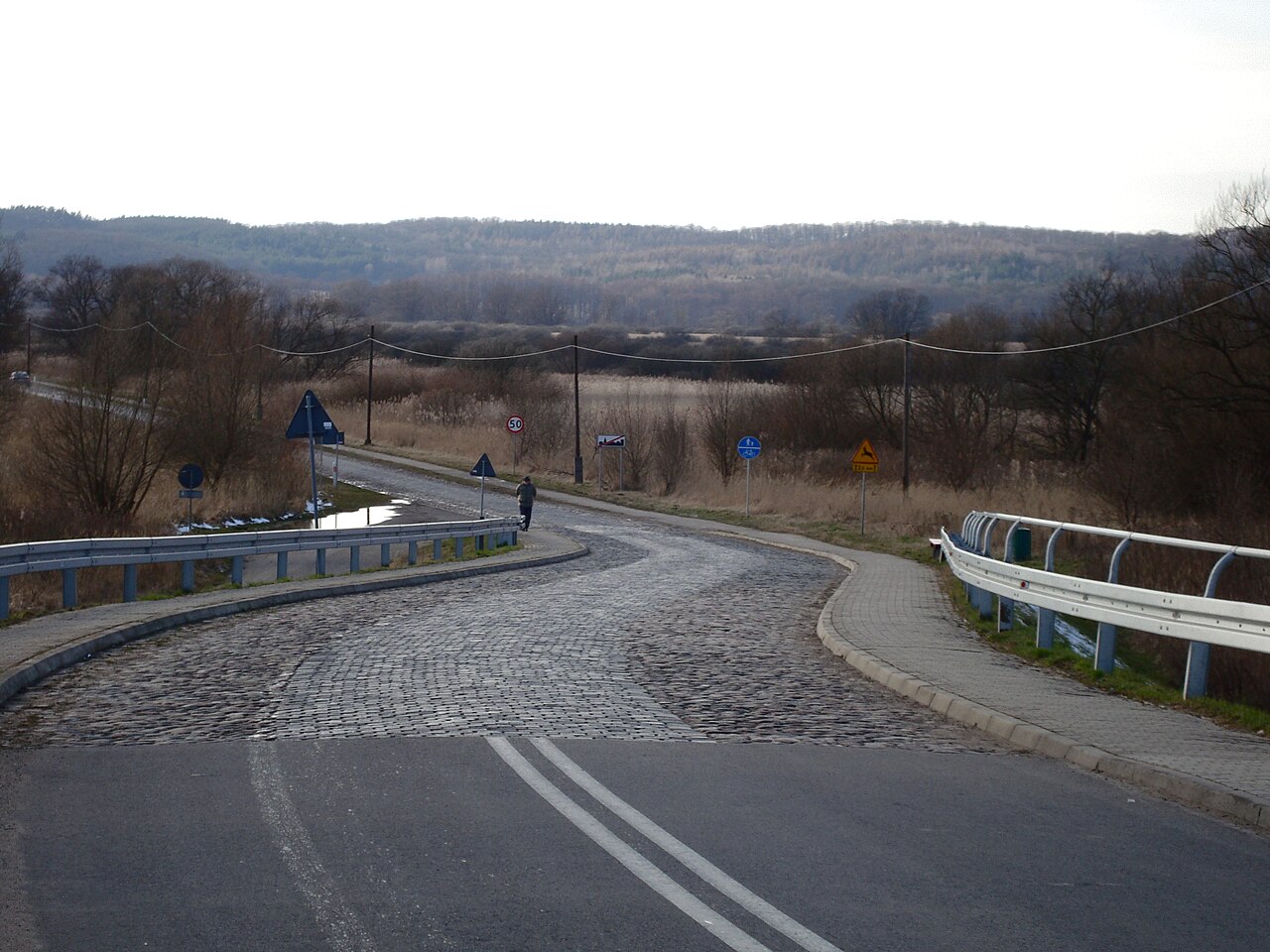
Town of Gryfino - PolandKomaares - komaares, CC BY-SA 4.0, Wikimedia Commons

Advertisement

Can people visit the Crooked Forest?

Yes, of course. It is on protected land, but open to the public—if you can find it. According to various internet sources, the trees are actually quite difficult to find.
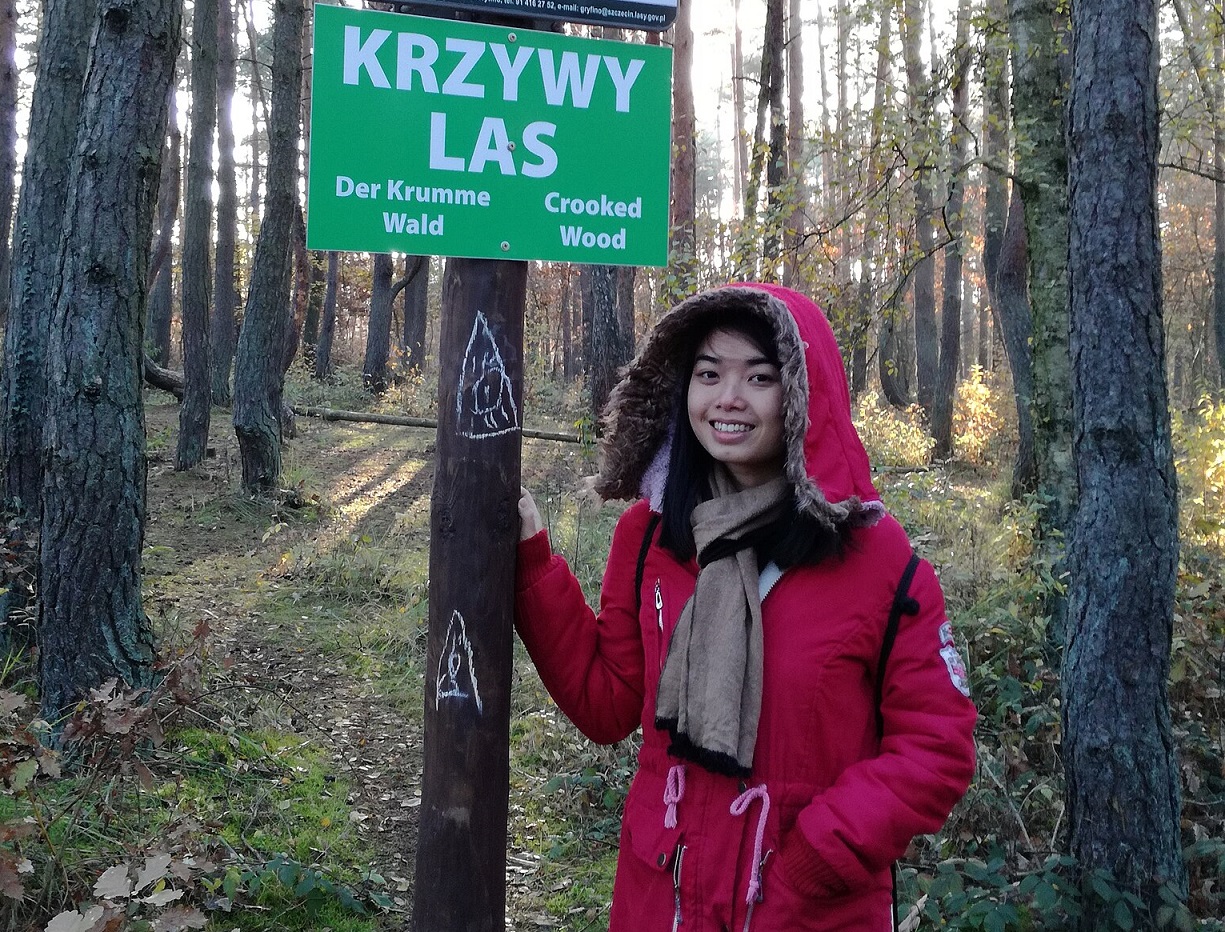
Woman standing next to a sign in Crooked wood (Krzywy Las) - Gryfino, Poland.Hoaittt16, CC BY-SA 4.0, Wikimedia Commons

Advertisement

What wildlife lives in the Crooked Forest?

Aside from the awkwardly shaped trees, everything else in the forest is typical of a normal forest—including the animals, which includes: deer, rabbits, squirrels, bugs, and birds.

deer male and female in winterDelbars, Shutterstock

Advertisement

Is the Crooked Forest haunted?

Some people believe the forest is haunted, given its strangely shaped structure. However, there are no reports of any specific hauntings happening within the area.
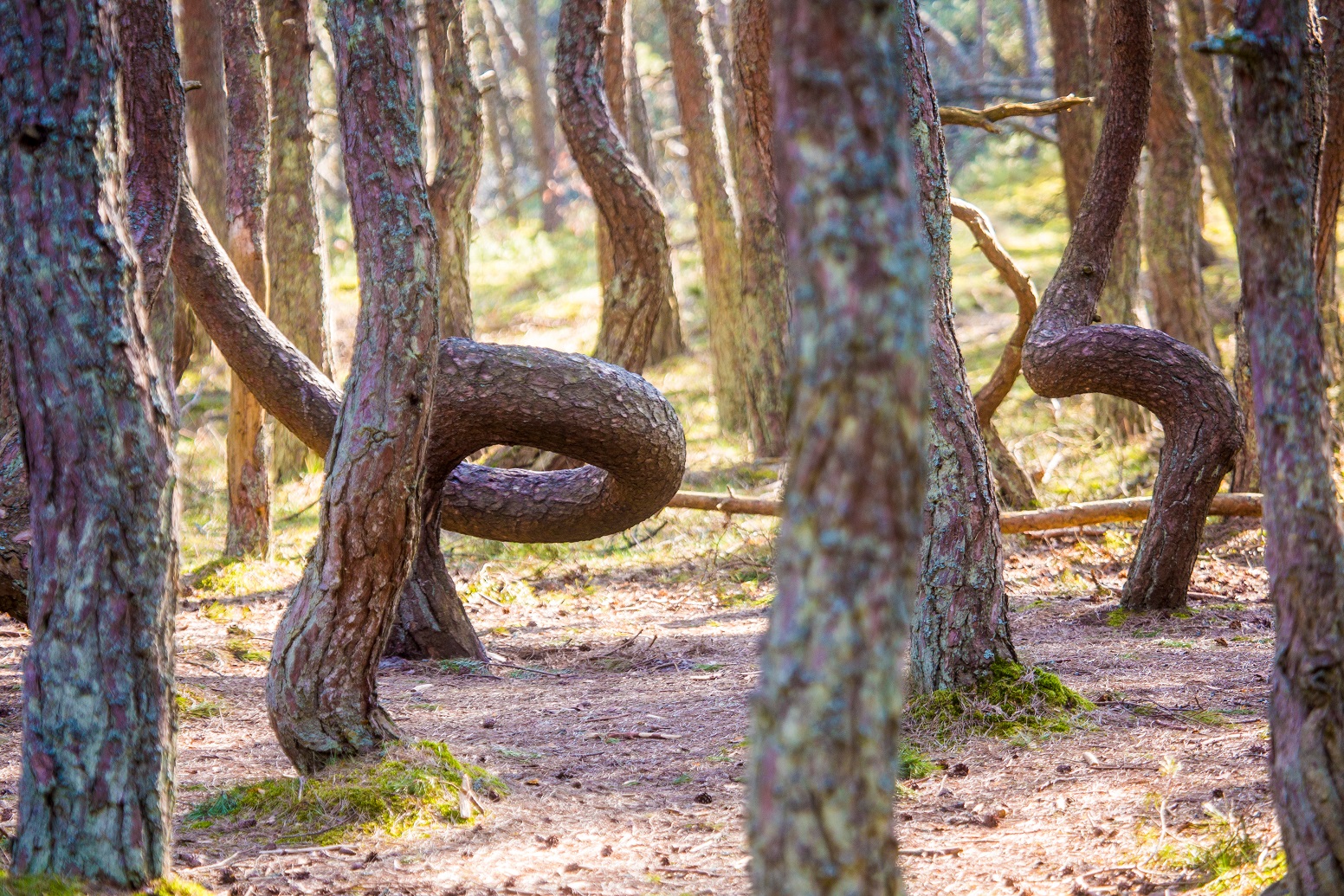
pine forest, crooked trees, close-up - Gryfino, PolandSturmUfa, Shutterstock

Advertisement

What does the rest of the forest look like?

The bent trees are surrounded by hundreds of normal trees of varying sizes—but all of usual tree shape. In fact, there is nothing else bizarre about the rest of the forest at all.
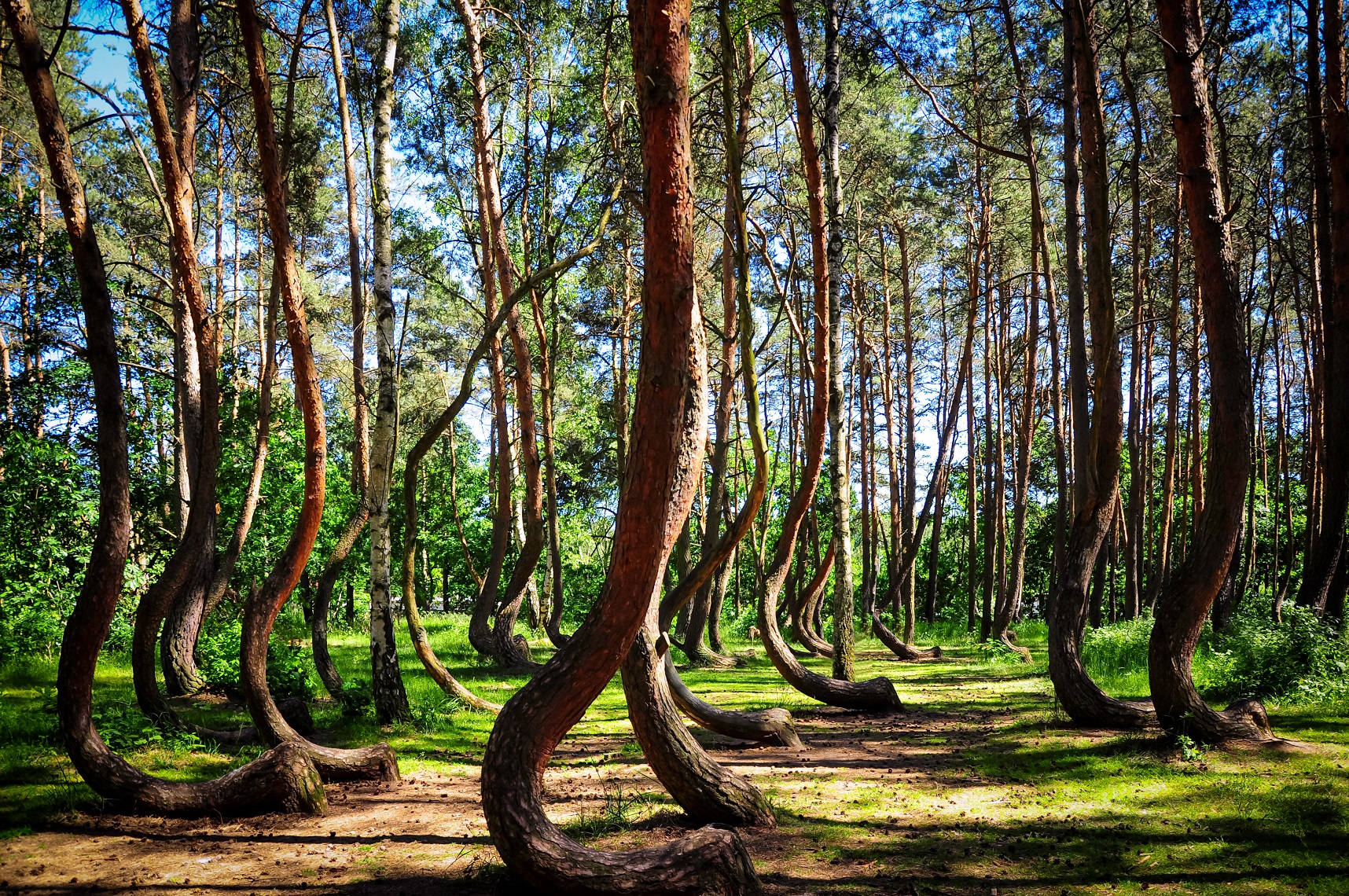
Crooked Forest (Krzywy Las), Gryfino, West Pomerania, Polandboreas.tr, Shutterstock

Advertisement

Final Thoughts

Although there are many theories surrounding the fascinating shape of the trees, there are no definitive answers. Even still, it makes for a wonderful use of our imagination, and a fun topic of conversation.

Woman Walking in the woods.Spencer Selover, Pexels

Advertisement

Sources: 1, 2


READ MORE

Mggallery

Archaeologists excavated a chultun mass grave in Mexico, but it was DNA analysis that found the twin boys who echo the Maya myth of the Hero Twins.

A hidden chamber beneath the famed ruins of Chichen Itza has yielded one of the most haunting and illuminating archaeological discoveries in decades. In 1967, builders unearthed an underground cistern near the site’s sacred sinkhole, packed with the remains of over 100 children. Recent DNA work on 64 of those remains, published in 2024, reveals a dramatic new truth: every one was a young boy, including two sets of identical twins. This isn’t just a cold scientific footnote. It actually offers a deep, human echo from a civilization many thought they understood
January 2, 2026 Marlon Wright

Thinking About Retiring? These Are The States That Will Cost You The Most

From housing and healthcare costs to taxes and everyday living expenses, where you choose to spend your later years has a massive impact on how far your savings will go. Based on recent retirement cost analyses and data on savings needed to retire comfortably, here are the 20 most expensive states to retire in and how much you’d likely need saved to call that state home.
January 2, 2026 Peter Kinney

Foodies Around The World Say These Countries Have The Best Street Food

Street food is where a country’s culinary soul shines brightest, sometimes humble, always delicious, and packed with culture. Based on travel guides, global street-food rankings, and foodie consensus from around the world, here are 20 countries where street food is a must-try experience, ranked from delightfully flavorful to undeniably the best.
January 2, 2026 Quinn Mercer
La Alcudia - Fb

Eight seasons of exhaustive digs at an Ancient Roman site in Spain reveal a sprawling Roman bath complex with a giant natatio and vivid mosaics.

Just outside Elche, calm fields and gentle hills sit over an unexpected secret. La Alcudia conceals its history so thoroughly that its depth becomes visible only when the soil is opened for all to see. Layers of time lie there like folded pages, each preserving traces of earlier worlds. Across eight digging seasons, archaeologists uncovered a Roman bath complex of remarkable scale. Baths were shared throughout the empire, yet few in Spain survive in such size or with such preservation. The discovery revealed not a modest installation but a sophisticated public space shaped for regular use and community life. When excavation began, the extent of the complex remained unknown, but its centerpiece soon emerged: a massive natatio, an open-air swimming pool large enough to evoke scenes of Roman citizens moving through the water beneath open sky. Surrounding rooms traced a full bathing sequence, from warm spaces to cold plunges and steam rooms, all supported by a hypocaust system circulating heated air beneath the floors. With each season, new chambers and pools appeared, exposing a site built for a substantial population and functioning as an essential gathering place for relief, routine, and social connection.
January 1, 2026 Marlon Wright
Untitled Design (23)

Researchers re-opened a 5,000-year-old tomb in Andalusia and found ivory and amber from thousands of miles away, proof of prehistoric trade routes.

Archaeologists in southern Andalusia recently uncovered a massive stone tomb that dates back an astonishing 5,000 years. The structure, buried beneath layers of soil near the town of Teba, appears far more elaborate than most prehistoric graves found in the region.
January 1, 2026 Alex Summers
812645214 Inrap President Dominique Garcia

An INRAP crew in the south of France has unearthed rows of planting pits from a Greek-era vineyard not far from the ancient Greek colony of Massalia.

As INRAP teams opened trenches in Marseille’s northern districts, the work initially looked like another routine intervention beneath busy streets. Layers of asphalt and industrial debris came away as expected, each tied to the city’s long expansion. But then a curious alignment appeared: evenly spaced pits forming a geometry too deliberate to ignore. What seemed like a minor irregularity expanded with every foot of soil removed. By the time the full pattern emerged, archaeologists realized they were no longer dealing with isolated traces. They were facing the layout of a Greek-era vineyard positioned 1.2 miles beyond ancient Massalia.
December 31, 2025 Marlon Wright