Welcome To America’s Strangest Tourist Attractions

Welcome To America’s Strangest Tourist Attractions


July 6, 2023 | Kaddy Gibson

Welcome To America’s Strangest Tourist Attractions


When it comes to tourist attractions, you may be surprised at some of the creepier ones that draw in crowds of visitors. America may be the home of the brave, but it’s also the home of the strange. Keep reading to learn about three of the weirdest tourist attractions in the country.


Carhenge, Alliance, Nebraska
CarhengeShutterstock

Advertisement

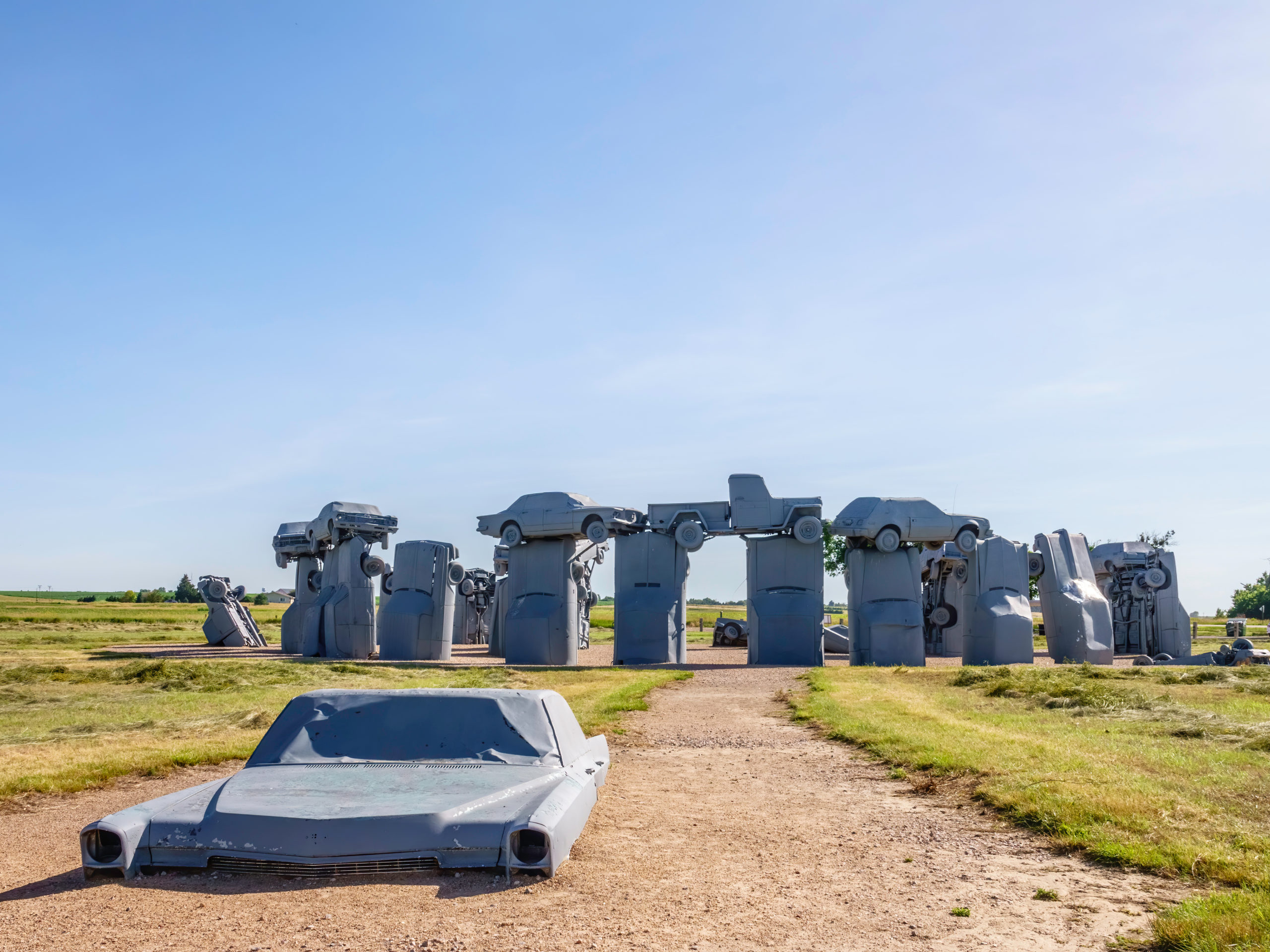
While there’s no mystery or spirituality behind the origins of this monument, it is still interesting to behold—and is one of the country's strangest tourist attractions. With a little help from his family, artist Jim Reinders built this peculiar replica of Stonehenge in honor of his late father. With the same proportions as the original Stonehenge, Reinders monument is made up of 39 cars that were painted gray like stone. If you take a trip to Carhenge, you can also stop by the nearby Car Art Reserve which features several other vehicular art installations.

Market Theater Gum Wall, Seattle, Washington
Market Theater Gum WallShutterstock

Advertisement

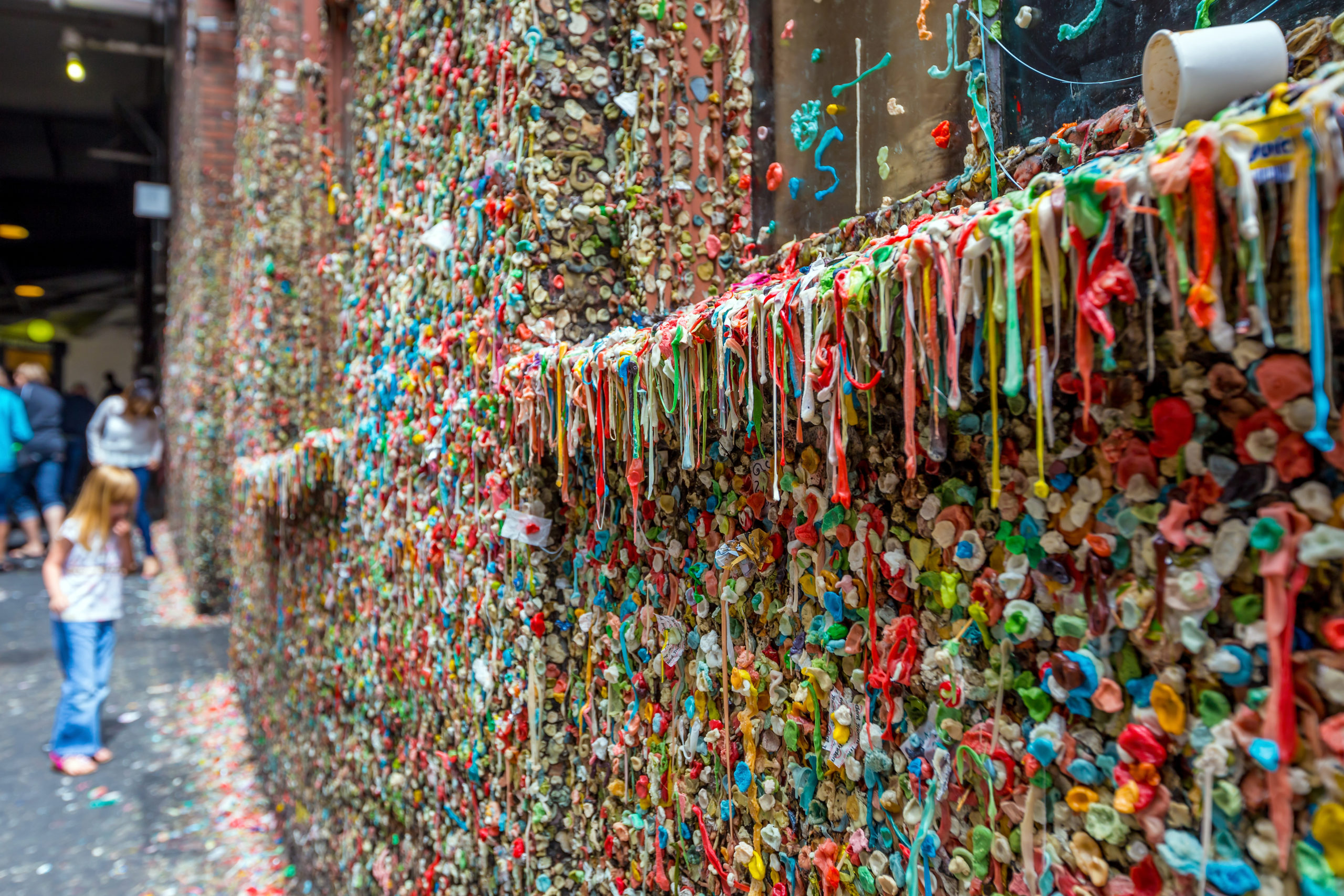
This one isn't for the germaphobes. For over two decades, the Market Street Gum Wall has been expanding its collection of used, chewed-up wads of gum. It all started when some bored patrons got tired of waiting in line for the theater box office. Some people just stuck their gum to the wall, while others went the extra creative step and molded theirs into tiny sculptures. The city cleaned the wall several times, but the gum-sticking craze was unstoppable. Eventually, they decided to leave the gum there. Who would have guessed this wall of germs would become one of America’s strangest tourist attractions?

World’s Largest Chest Of Drawers, High Point, North Carolina
World's Largest Chest of DrawersShutterstock

Advertisement

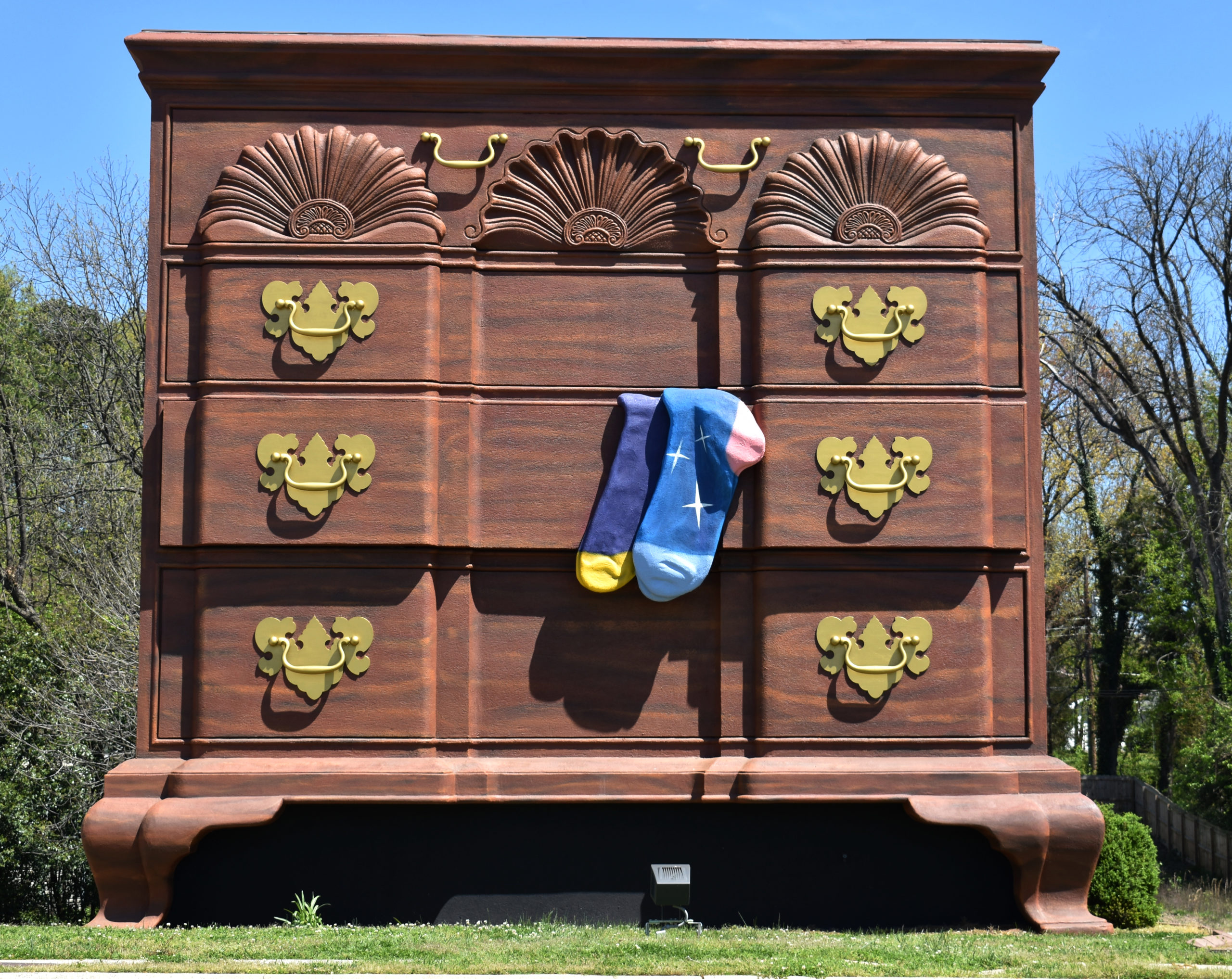
Standing 12 meters (39 feet) tall, the World’s Largest Chest Of Drawers was originally built in 1926. Seeking to prove that they were the world’s furniture capital, the city of High Point built the structure out of a six-meter (20-foot) office building. In 1996, the drawers were reconstructed into the towering Goddard-Townsend style chest that you can visit today.

Cockroach Hall of Fame, Plano, Texas
Cockroach Hall of FameFlickr

Advertisement

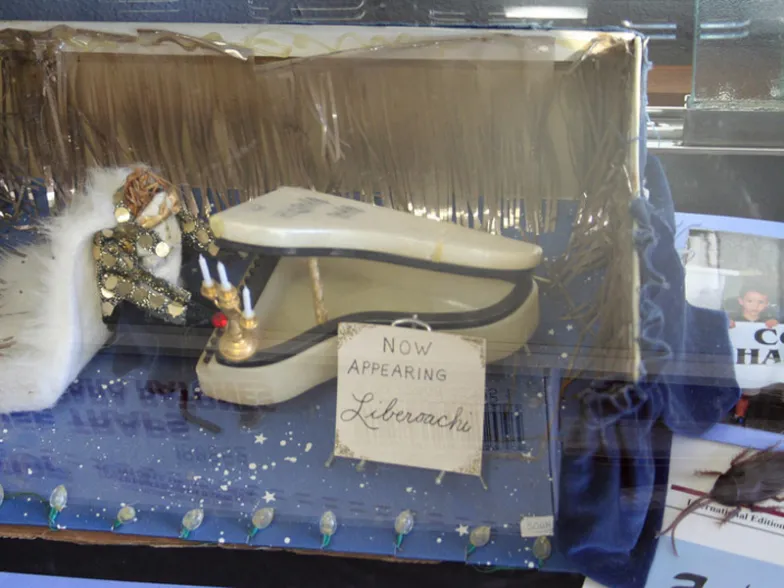
If bugs give you the heebie jeebies, then you might want to sit this one out. The Cockroach Hall of Fame is the strangest attraction in America. It was created by pest control specialist Michael Bodhan, who wanted people to be able to laugh at the creepy critters rather than recoil in disgust and fear. Posed in their own little sets, the dead roaches have been dressed up to portray pop culture icons. So, if you’re interested in taking a peek at Liberoachi or Marilyn Monroach head over to the adorably bizarre Cockroach Hall of Fame.

These attractions may be incredibly weird, but they’re guaranteed to leave you with some unforgettable and unique memories.


Sources: 1


READ MORE

HistoryUncovered

Impossible Discoveries That Turned Out To Be True After All

Everyone loves a good myth, especially when experts roll their eyes. Time passed. Dust settled. Evidence refused to stay buried, and familiar fairy tales suddenly came back, wearing boots, teeth, walls, and fingerprints everywhere.
February 6, 2026 Marlon Wright
Hoba Meteorite

The largest meteorite ever to hit Earth can be found exactly where it landed 80,000 years ago.

While museums display meteorite fragments removed from impact sites, Namibia preserves a singular cosmic trophy exactly where it landed. The Hoba meteorite remains untouched at its African resting place.
February 6, 2026 Miles Brucker
Internal - Iraq Tombs

Severe drought reveals 40 ancient tombs at Iraq’s Mosul Dam reservoir, exposing Hellenistic‑era burials long submerged by rising water

Severe drought at Iraq’s Mosul Dam reveals 40 ancient Hellenistic-era tombs, uncovering long-submerged burial practices and hidden history beneath the reservoir.
February 6, 2026 Jack Hawkins
Man Sleeping on a Woman’s Shoulder in an Airplane

I fell asleep on a long flight and woke up to find my seatmate using my shoulder as a pillow. Am I allowed to report that?

Long-haul flights turn strangers into temporary neighbors crammed into metal tubes hurtling through the sky at 500 miles per hour. You've settled into your seat, maybe scored the window spot, popped in your earbuds, and drifted off somewhere over the Atlantic. Then you wake up to an unexpected situation: your seatmate has turned your shoulder into their personal pillow. Their head's resting there, possibly drooling on your favorite travel hoodie, and you're stuck in this weird limbo between politeness and personal space violation. The question isn't just whether you can report this behavior, but whether you should, and what actually counts as reportable conduct at 35,000 feet. Airlines deal with thousands of passenger complaints annually, but where does uninvited shoulder-napping fall on the spectrum of airplane etiquette violations?
February 5, 2026 Miles Brucker
Woman At the airport gate with concern

Americans used to need only a passport to visit the UK. Now without a new Electronic Travel Authorization you can’t board the plane—and it isn’t free.

For decades, Americans could hop on a plane to the United Kingdom with just a valid passport and show up ready for adventure. No pre-travel approvals. No online forms. No extra steps. Passport in hand—that was enough. But that era is officially over.
February 5, 2026 Jesse Singer
Guest at the hotel reception

My hotel front desk refused to give me extra towels because they said I’d “already had enough.” Is that normal policy?

The request itself was ordinary. A guest asked for extra towels, expecting the kind of neutral response hotels usually give without pause. Instead, the answer felt abrupt, as if a basic comfort had suddenly turned into a favor. Moments like this tend to linger because they disrupt expectations rather than violate rules. Towels are rarely noticed when available, yet their absence becomes symbolic when access feels restricted. What should have been forgettable becomes oddly memorable. These interactions raise larger questions about how hospitality defines “reasonable,” where cost and environmental concerns quietly intervene, and how small refusals reshape a guest’s perception of care. This article examines standard towel practices, explains why denials sometimes happen, and outlines what both guests and hotels can learn when everyday comfort becomes negotiable.
February 5, 2026 Miles Brucker